


A Guide to Cleaning and Storing Your Instrument with String Swing
Aug 4th 2023
For musicians, your instrument is not only a valuable investment but a meaningful possession. All instruments require special care to keep them in top shape, especially guitars. Understanding how to clean and store your guitar properly isn't just essential to maintain its aesthetic appeal, but also vital to preserve the quality of its sound and prolong its lifespan.
Cleaning and storing your guitar may seem like a chore, but with our guide and the right tools, it can become a part of your regular routine. Not only will this keep your guitar in its best shape, but it also gives you the opportunity to better understand your instrument.
Understanding Your Guitar: Acoustic vs. Electric
Guitars come in a variety of types and styles, each with its own unique requirements for maintenance and care. Before diving into the cleaning process, it's important to understand the difference between an acoustic guitar and an electric guitar, as each requires a slightly different cleaning approach.
Acoustic Guitars
Acoustic guitars are typically made of solid wood, most commonly spruce, cedar, and mahogany, and often feature a natural, glossy finish. This type of guitar is characterized by a hollow body that amplifies the sound of the strings. Given their material and design, acoustic guitars can be quite sensitive to dirt and grime build-up, which can dull the guitar's finish and affect the quality of the sound. Therefore, a clean acoustic guitar not only looks better, it can potentially sound better too!
Electric Guitars
Electric guitars, on the other hand, typically feature a solid body and may have a range of finishes from natural to metallic. They rely on electric amplification to produce sound, which makes them less susceptible to the adverse effects of dirt on sound quality. However, grime build-up can still damage the finish, particularly in the case of a satin finish that can become shiny and uneven with excess dirt and oil.

Choosing the Right Cleaning Materials
The next step is to gather the right cleaning materials. It's essential to use materials that are gentle enough to avoid scratching or damaging your guitar's finish but still effective at removing dirt and grime. Below are the basics:
1. Soft Microfiber Cloth:
- Usage: Ideal for wiping down the guitar's body, removing dust, fingerprints, and superficial dirt.
- Why Choose Microfiber: Unlike regular cloths, microfiber has finer fibers that pick up tiny particles of dust and grime without scratching the finish.
2. Fretboard Cleaning Tools:
- Steel Wool (0000 grade): Excellent for removing tough grime on the frets but must be used with caution to avoid scratches.
- Fretboard Conditioner/Lemon Oil: Helps to clean and condition the fretboard, restoring its natural shine.
- Specialty Fretboard Brushes: These brushes have soft, durable bristles designed to reach the hard-to-clean areas between the frets.
3. Guitar Polishes and Cleaners:
- Guitar Polish: Specially formulated for guitar finishes, guitar polish can add a fresh, gleaming look without harming the finish.
4. Cleaning Solutions for Metal Parts:
- Isopropyl Alcohol: Perfect for cleaning metal parts like the bridge and tuning pegs. It evaporates quickly, leaving no residue.
- Metal Polish (optional): For guitars with extensive metal hardware, a gentle metal polish can be used to remove oxidation and tarnish.
5. String Tools:
- String Winder: This tool helps in removing and replacing strings efficiently.
- String Cutter: Essential for trimming the ends of new strings after installation.
Of course, before using a product or tool, be sure to read the directions, manufacturers’ instructions, and consider your unique guitar material.
A Comprehensive Guide to Cleaning Your Guitar
Now that we've laid out the groundwork by understanding your guitar type and the tools needed, let's dive into the step-by-step guide for cleaning your guitar. It's important to remember that regular basis cleaning is more beneficial than occasional deep cleaning, keeping your instrument in the best possible condition for each playing session.
General Cleaning Acoustic Guitars
- Start with a dry cloth: Gently wipe down the body, neck, and headstock using a dry microfiber cloth. This will remove dust and loose particles.
- Use a damp cloth if necessary: For stubborn dirt, slightly dampen a section of the cloth with distilled water or a specialized guitar cleaner and gently rub the area. Never spray the liquid directly onto the guitar. Thoroughly dry your guitar with a fresh cloth.
Fingerboard & Frets: Deep Cleaning Your Electric Guitar
Step 1: Remove the Strings
Before you begin the cleaning process, you need to remove the guitar strings. This provides you access to the entire fretboard, allowing you to clean it effectively. Remember to be cautious when removing the strings, especially if you're using steel wool to clean the fretboard, as it can cause permanent damage to your guitar's finish if it comes into contact with the guitar's body.
Step 2: Clean the Fretboard
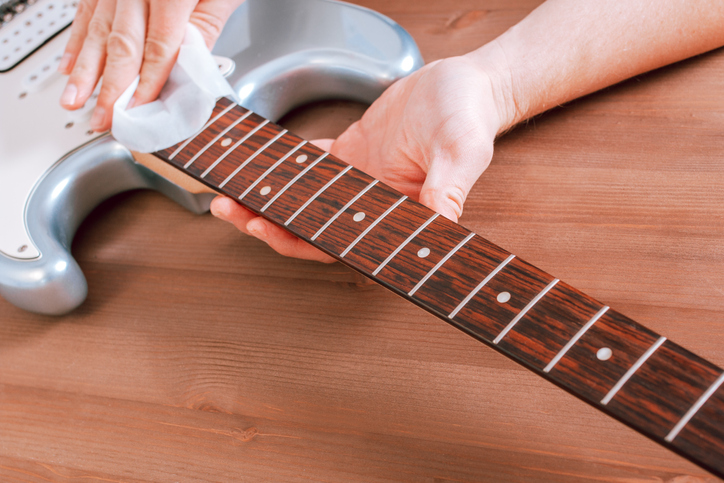
Start by dusting off any loose dirt or debris from the fretboard using a dry cloth. For a deeper clean, you can use a small amount of lemon oil or a dedicated fretboard conditioner. Apply it to a clean cloth and gently rub it into the fretboard, following the grain of the wood. If your guitar has a maple fretboard, skip the lemon oil as it can discolor the wood. Instead, use a slightly damp cloth to clean the surface, then dry it thoroughly. For tough grime on the frets, consider using a small amount of lighter fluid on a cotton swab. Remember, always use fluids sparingly to avoid damage.
Step 3: Polish the Guitar's Body
Using a dry microfiber cloth, gently wipe the entire body of the guitar to remove dust and fingerprints. For an added shine, especially on glossy finishes, use a guitar polish to give your guitar's finish a fresh, gleaming look. Avoid using polish on satin-finished maple or matte guitars as it can make the finish shiny. The main things to consider are using a clean microfiber cloth and ensuring the guitar polish is ideal for your guitar.
Step 4: Clean the Guitar's Metal Parts
For electric guitars, pay particular attention to the metal parts like the bridge and tuning pegs. These areas can be cleaned with isopropyl alcohol, a soft cloth, or small tools like toothbrushes and Q-tips. Avoid using steel wool here as it can cause scratches and lead to rusting over time.
Step 5: Replace the Strings
Once the guitar is thoroughly clean, it's time to replace the strings. Always use new strings for a crisp, bright sound. If you're new to stringing a guitar, there are numerous tutorials available online to guide you through the process. Remember to stretch new strings slightly to keep them in tune.

Properly Storing Your Guitar
Learning how to properly clean and maintain your guitar is a crucial part of owning an instrument. But your guitar care routine should not stop at cleaning. The way you store your instrument also has a significant impact on its longevity and performance.
Escaping the Case!
When it comes to safe storage, many musicians turn to their guitar cases. But at String Swing, we encourage you to look outside the case to maintain more accessibility and convenient display of your beautiful instrument. Of course, the decision between displaying a guitar and using a guitar case depends on individual preferences, lifestyle, and space considerations. Displaying offers aesthetic pleasure and easy access, encouraging frequent playing and cleaning, while a case provides robust protection, especially during travel or long-term storage.
Ultimately, the choice reflects a balance between showcasing your instrument and the level of protection you desire. Many musicians find value in both, displaying their guitars at home and using cases when on the road or storing instruments not in regular use.

Other Considerations for Storage
Invest in a quality hanger specifically designed for guitars with padded arms. Ensure the wall and the hanger are robust enough to support the guitar's weight and the material will not damage your guitar’s finish (avoid rubber and foam). Proper installation, using anchors or wall studs, is essential for stability.
Keep the guitar in a consistent humidity level (40-60%) and a temperature between 65-75°F (18-24°C). Avoid placing it near radiators, vents, or windows where it might be exposed to direct sunlight or temperature changes.
Regularly check and clean the guitar for signs of wear or damage. If storing for an extended period, consider loosening the strings slightly. Make sure the guitar's weight is evenly distributed on the hanger and that it's not leaning at an extreme angle.
The Most Trusted Guitar Storage Solutions
At String Swing, we offer the best, safest, and most convenient way to store guitars with a wide range of guitar stands, hangers, and display solutions for all types of guitars. Our safe materials and convenient configurations are key to properly cradling your guitar while avoiding any scratches or damage to your valuable instrument.
Explore our range of guitar storage solutions and build your personal at-home storage solution to better maintain, protect, and appreciate your valuable instruments!